4 Clifton Street, Lytham FY8 5EP.
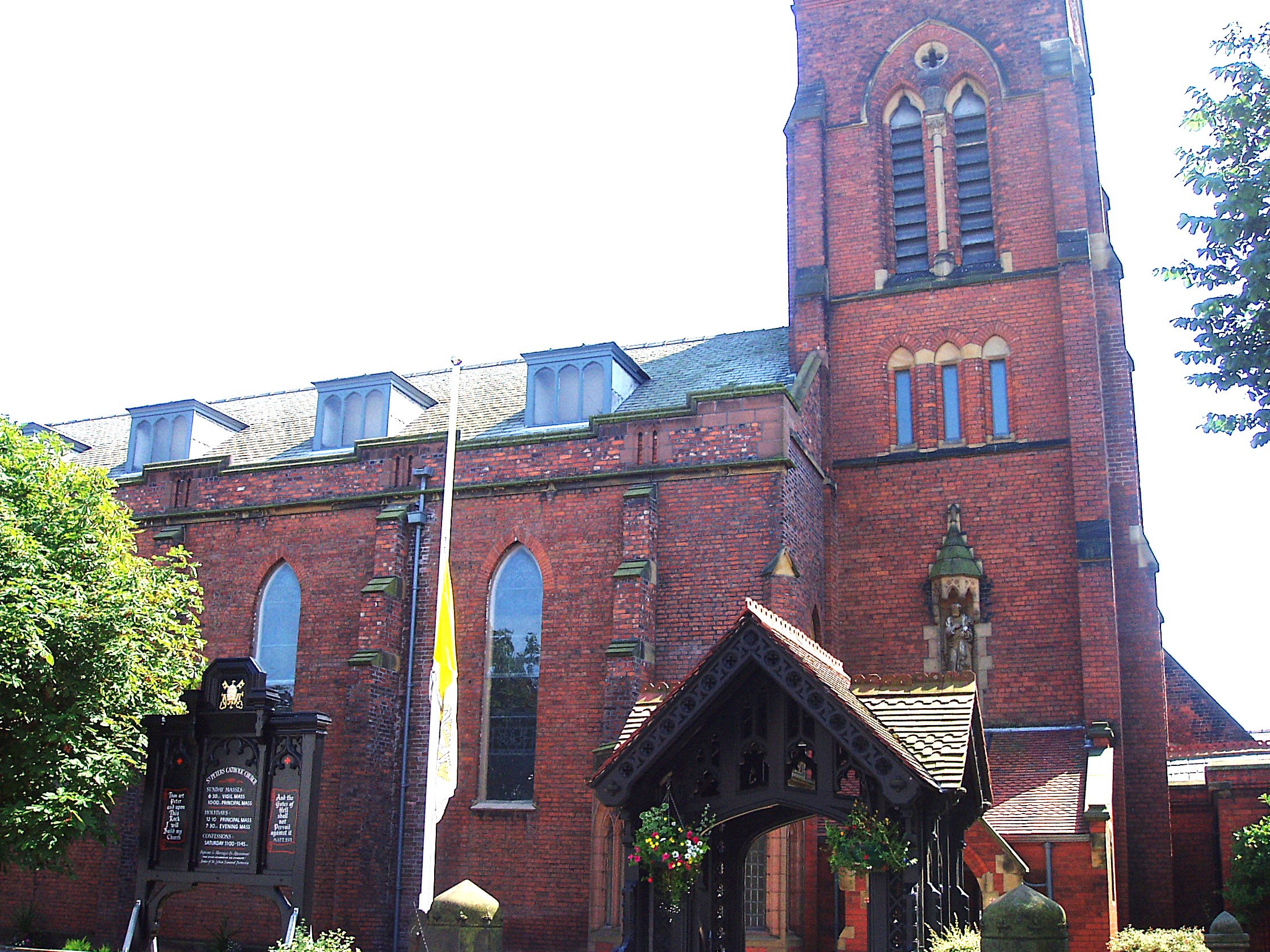
A plain Gothic brick box, late Georgian in style, the significance of which lies perhaps above all in its townscape contribution and the various additions and embellishments made over the years.
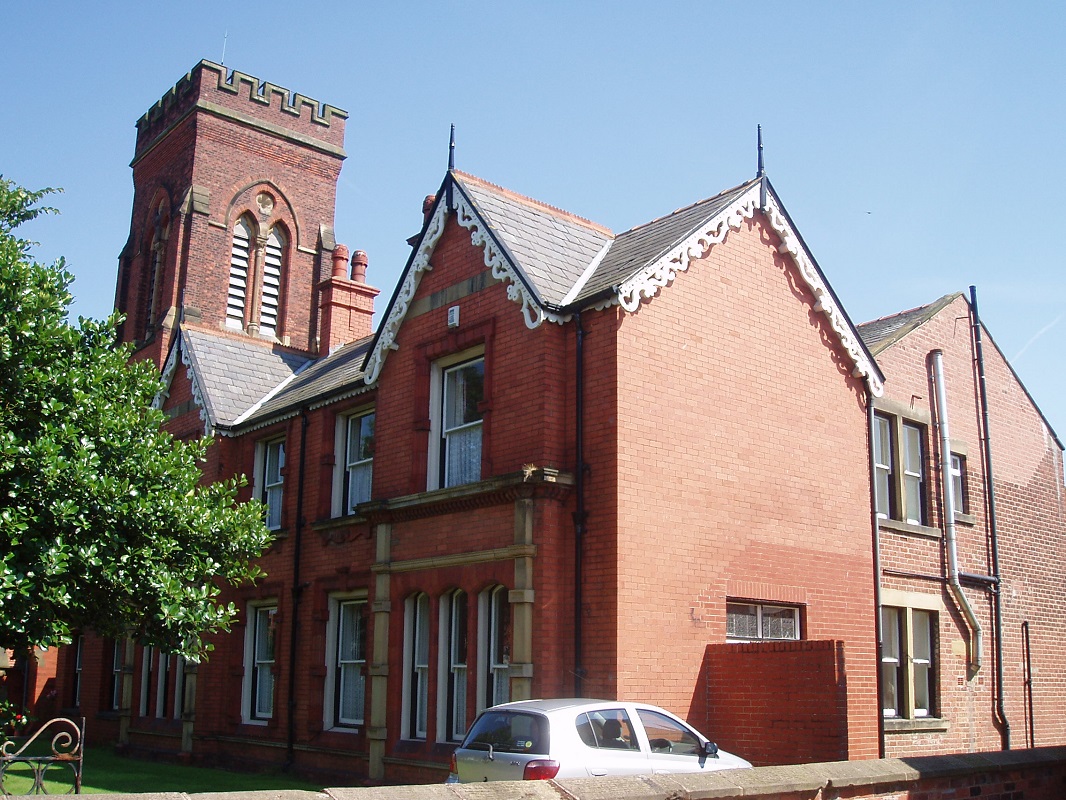
In the eighteenth century the Clifton family maintained a chapel at Clifton Hall (rebuilt by John Carr). From c.1800 Mass was said in a tithe barn fitted out as a chapel, but this ceased in 1832 with the accession to the estate of J.T. Clifton, a keen Protestant. In 1838-9 therefore a new church was built in the town, a large brick Gothic church costing £3,000 and designed to accommodate 700 people. The church was opened by Dr Briggs, Vicar Apostolic, on 1 August 1839. In 1850 a new school was built and a nearby house acquired to serve as a presbytery. In 1876 sacristies and side chapels, were added, with elaborate stone altars (said to be by Pugin & Pugin). In 1878 the tower was added, from designs by James O’Byrne and at the expense of Colonel Clifton, who had been reconciled to the Catholic faith. In 1885 Fr Roger Taylor became resident priest. He enlarged the sanctuary (architects possibly Sinnott & Powell, according to The Buildings of England) and added the attractive timber framed lychgate (an attribution to Pugin & Pugin seems likely, given Canon Taylor’s frequent use of that firm and their likely previous involvement with the church). About the same time an entrance porch was added, abutting the street elevation of the tower, and the presbytery was extended, using similar materials. In 1921 a projecting northwest baptistery was added, from designs by W.C. Mangan.
Description
As originally built in the 1830s the church was a large but plain brick box, with lancet windows and an internal west gallery, so still late Georgian and pre-ecclesiological in character. The later sanctuary is in Accrington or Ruabon red brick.
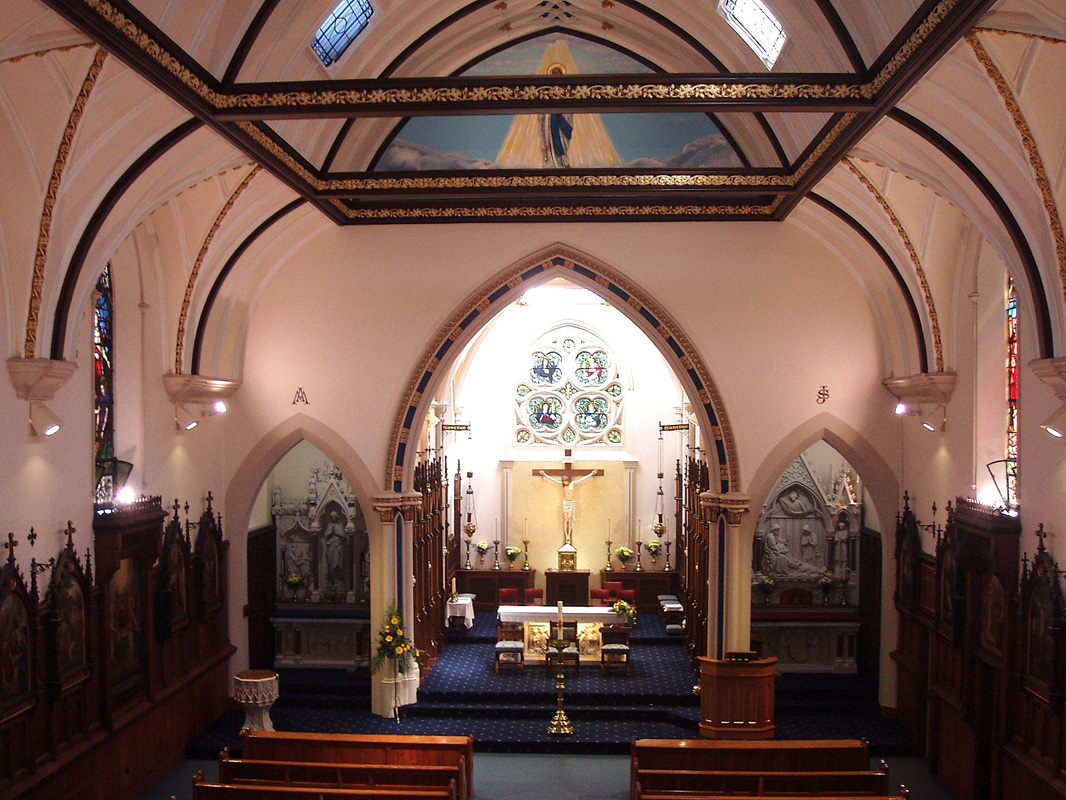
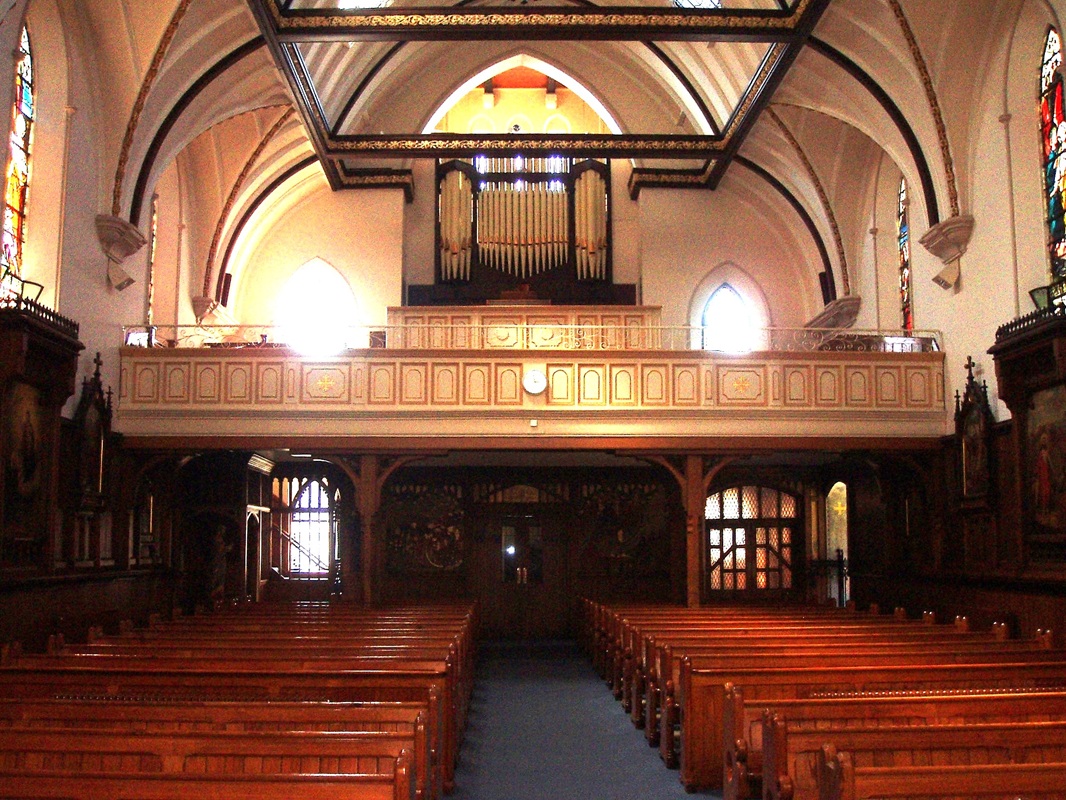
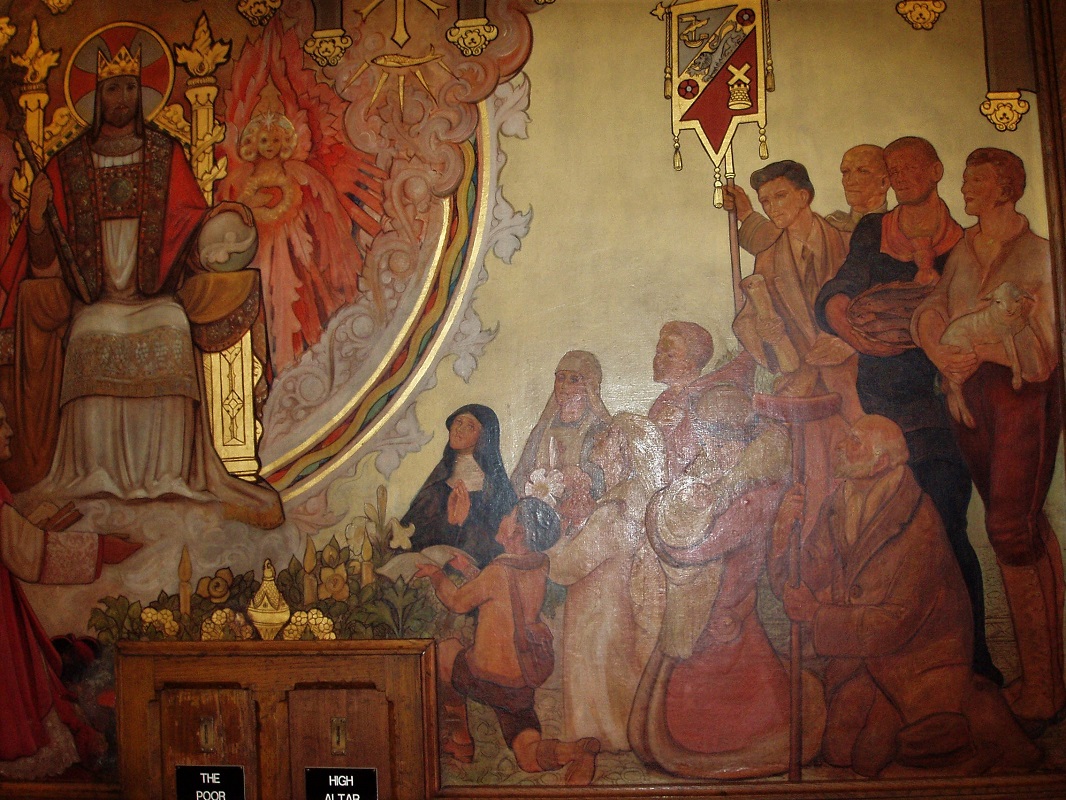
The interior is unexpected and original in its design, and rich in its fitting out. It includes a plaster vaulted ceiling with tie beams carved with acorns and vine scroll. A post-Vatican II reordering has involved the removal of altar rails and the old high altar, although the mensa has been retained as a forward altar. Some of the original seating survives in the gallery. There is late nineteenth century stained glass in all the windows (much of it by Mayer of Munich) and the walls are lined with decorative oak panelling into which are set nineteenth century paintings and Stations of the Cross, probably by Pugin & Pugin. There are high quality paintings of the 1920s against the west wall below the gallery and more by the same artist in the sacristy. There is a painting of Our Lady over the chancel arch. At the southwest corner is a projecting sandstone baptistery of 1921, decorated with mosaics. The font was moved away from here in post-Vatican II reordering, and the space is now a memorial chapel to former parish priests.
St Peter’s has seen considerable alteration and embellishment over the years, and more research is needed.
Entry amended by AHP 17.09.2026
Architect: Additions by J. O'Byrne, P.P. Pugin, Sinnott & Powell, W.C. Mangan
Original Date: 1834
Conservation Area: Yes
Listed Grade: Not Listed